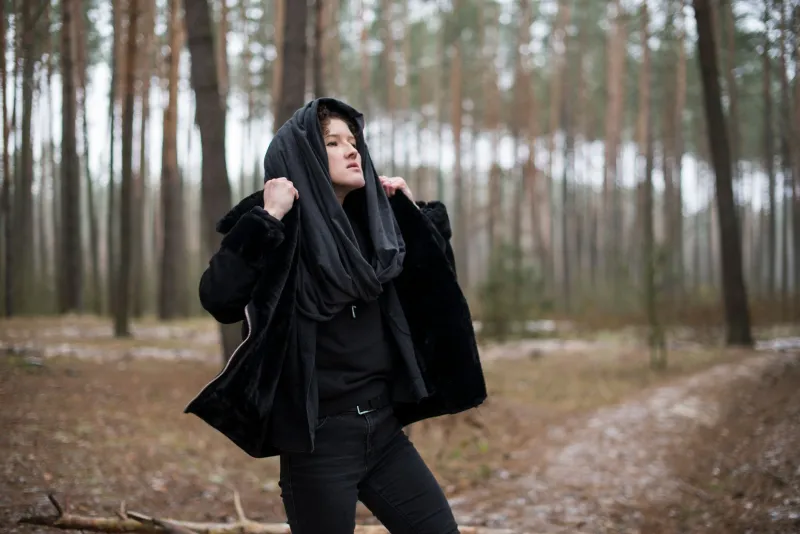
Coming Out of the Cocoon: How to Step Into Your Transformed Self Without Apology
You've done the hard inner work. You've sat with the discomfort, shed what no longer fit, and quietly rebuilt yourself from the inside out. Now comes the part nobody really prepares you for — actually showing up as this new version of yourself in front of everyone who knew the old one.
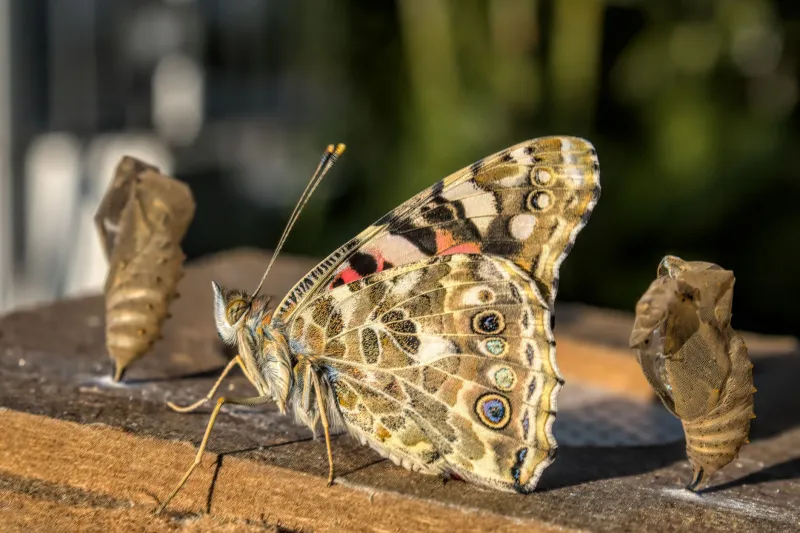
This moment has a name in the natural world: eclosion. It's the precise instant a butterfly breaks free from its chrysalis and begins to unfurl its wings for the very first time. And here's the thing about eclosion — it's not instant. The butterfly doesn't just burst out fully formed and immediately take flight. It hangs there, wings damp and folded, slowly pumping fluid into each vein until it's finally ready to lift off.
That hanging moment? That's exactly where a lot of us get stuck.
We've changed. We know we've changed. But stepping into that change in front of other people — our families, our coworkers, our oldest friends — feels weirdly terrifying. So we hover. We show the world just enough of our new selves to get by, while keeping the most transformed parts tucked safely inside.
If that sounds familiar, this one's for you.
Why Visibility Feels So Hard After Transformation
Here's something worth sitting with: the vulnerability of being seen in your new self can feel even more uncomfortable than the transformation itself. During the deep interior work, you had privacy. You could experiment, stumble, revise. Nobody was watching.
But the moment you start showing up differently in the world, people notice. And people have opinions.
Some will be genuinely thrilled for you. Others will be skeptical — not out of cruelty, but because change in someone close to us quietly asks us to examine our own lives. A few might even push back, consciously or not, trying to nudge you back toward the version of you they're most comfortable with.
None of that is your fault. But it is something you'll need to navigate.
The fear of that reaction — of being questioned, doubted, or quietly dismissed — is often what keeps people living in a kind of identity limbo. Changed on the inside, performing the old self on the outside. It's exhausting, and it's worth naming it for what it is: a temporary mismatch between who you are and who you're letting the world see.
You Don't Owe Anyone a Full Explanation
One of the most freeing things you can internalize right now is this: you do not have to defend your evolution to anyone.
You don't need to write a press release about your inner journey. You don't need to sit everyone down and walk them through the transformation arc like a TED talk. You can simply... show up as yourself. Consistently. Over time. And let the evidence speak.
When people ask why you seem different, you're allowed to say something as simple as, "I've just been doing a lot of thinking lately" or "I've grown a lot this past year." You can share more with those who've earned that depth of conversation. For everyone else, a warm smile and a grounded presence is enough.
Your transformation belongs to you. You get to decide how much of the backstory you share and with whom.
Pacing Your Emergence Is a Form of Self-Respect
Not everything has to change publicly all at once. In fact, trying to overhaul every relationship and social dynamic simultaneously is a recipe for burnout.
Think of your emergence the way that butterfly does — gradually, intentionally, one wing at a time. Maybe you start by showing up more authentically in one relationship. Maybe you begin speaking your actual opinions in a group setting where before you'd have gone quiet. Maybe you stop laughing at jokes that don't sit right with you anymore.
These small, consistent acts of alignment are how you introduce your new self to the world without blowing everything up at once. They let you test the waters, see who rises to meet you, and build confidence in your own voice before the bigger moments arrive.
Pacing isn't timidity. It's wisdom.
Finding Your Witnesses
Every emerging butterfly needs a few people who will simply see them — without needing the full origin story, without requiring proof, without projecting the old version back onto the new one.
These are your witnesses. And finding them is one of the most important things you can do during this phase.
Sometimes witnesses are new people — folks you meet after the transformation, who only ever know this version of you. They have no prior image to reconcile. They just see who you are right now, and that's genuinely refreshing.
Other times, your witnesses are people from your existing life who have the capacity to hold your growth with grace. They might say things like, "You seem really at peace lately" or "I love how you handled that." They don't need you to shrink back. They cheer the expansion.
Seek those people out. Be honest with them. Let yourself be witnessed fully. It does something powerful for your nervous system — and for your courage — to be truly seen without having to explain yourself.
What to Do When Others Can't See the Change
Some people in your life may simply not be able to meet you where you are now. That doesn't make them bad people. It just means the relationship may need to shift — or that you'll need to hold certain parts of yourself a little more privately around them.
This is one of the quieter griefs of transformation: realizing that not everyone gets to come with you into the next chapter. Some connections were built around a version of you that no longer exists. And while that's painful, it's also honest.
You're not required to keep shrinking to keep those connections intact. Staying small to preserve someone else's comfort isn't loyalty — it's self-abandonment.
You can love people and still grow beyond what that relationship can hold. You can wish them well and still create space for relationships that can actually hold who you're becoming.
Stepping Into the Light, On Your Own Terms
The unfurling is not a single moment. It's a practice. A daily, sometimes hourly, choice to keep showing up as the person you've become rather than defaulting back to the person you used to be.
Some days that will feel natural. Some days it'll feel like you're wearing a costume that doesn't quite fit yet. That's normal. The new self needs to be lived in for a while before it starts to feel like home.
But here's what the butterfly already knows: those wings were built for this. The entire point of everything that happened inside the chrysalis was to get you to this moment — wings spread, ready for air.
You don't have to leap before you're ready. But don't stay hanging on the branch forever, either.
The world you're meant to move through is out there. And it's waiting to meet the real you.