When You've Already Changed But No One Around You Has Noticed Yet
You did the work. You sat with the hard stuff, shifted something real inside yourself, and came out the other side genuinely different. Maybe it happened in therapy. Maybe it was a slow accumulation of hard seasons. Maybe you can't even point to a specific moment — you just know, with quiet certainty, that you are not the same person you were a year ago.
And then you walk into Thanksgiving dinner, and your uncle makes the same joke he's always made at your expense, and everyone laughs the way they always have — including you, because what else do you do? — and you drive home feeling hollowed out in a way you can't quite name.
That hollow feeling has a name: invisible growth. And it's one of the most emotionally complex experiences in any genuine transformation.
The Gap Between Internal Shift and External Reality
Here's the frustrating math of personal change: the people closest to you have years — sometimes decades — of data about who you are. Their perception of you is built on accumulated memory, established patterns, and the kind of shorthand that develops in long relationships. That's not a flaw. It's just how human connection works.
But it means that when you change, the people around you are often the last to update their picture of you. Not because they don't care, but because they're operating on a model that hasn't received the new information yet.
Researchers call this the "perception lag" in social relationships — the delay between when someone changes and when the people around them register and respond to that change. In some studies, close family members showed the longest lag time, simply because their internal model of a person was the most deeply entrenched.
Knowing this doesn't make it less frustrating. But it does make it less personal.
Why Invisible Growth Hurts the Way It Does
There's a specific kind of pain that comes from being seen inaccurately by people you love. It's different from being misunderstood by strangers. When someone who's known you for years still treats you like the most anxious version of yourself — or the most avoidant, or the most reckless — there's a grief in it. You're mourning the old dynamic even as you're hoping for a new one.
For many people, this experience triggers a crisis of confidence. Did I actually change? Maybe I'm just telling myself a story. Maybe they're right and I'm still the same.
This is one of the sneakiest aspects of invisible growth: the external world's failure to reflect your internal shift can make you doubt the shift itself. You start looking for evidence that you've changed, and when you can't find it in the eyes of the people around you, the doubt creeps in.
This is where a mindfulness practice — even a simple one — becomes genuinely useful. Not as a buzzword, but as a tool for staying anchored to your own experience when the external environment isn't confirming it.
Grounding Your Growth in Your Own Perception
Before you can navigate the external piece, you have to get steady on the internal one. That means developing a reliable relationship with your own sense of self — one that doesn't require outside validation to stay upright.
A few practices that actually help:
Keep a private record of your changes. Not for anyone else, just for you. When you notice yourself responding differently to a trigger that used to flatten you, write it down. When you catch yourself setting a boundary that your former self would have swallowed, note it. Over time, this record becomes evidence you can return to when the doubt shows up.
Name what's different in behavioral terms. Vague feelings of having changed are harder to hold onto than specific observations. Instead of "I feel like I'm less reactive," try: "Last week, when my partner said that thing that usually spirals me, I paused before responding and the conversation went differently." Concrete is more durable than abstract.
Find at least one witness. This doesn't have to be someone in your existing inner circle. A therapist, a support group, a trusted new friend — someone who has encountered you after the shift, without the weight of prior perception, can reflect the current version of you back with a clarity that people from your past often can't.
Communicating Your Changes Without Demanding a Verdict
At some point, if you want the people in your life to update their perception, you have to help them get there. And this is where a lot of people get stuck — either saying nothing and resenting the stagnant dynamic, or over-explaining in a way that comes across as defensive.
The most effective approach tends to be behavioral consistency over time, with occasional gentle narration.
Behavioral consistency means continuing to show up as your changed self, even when the people around you are still responding to the old one. Don't perform the old patterns to make someone comfortable. But also don't make every interaction a referendum on who you've become.
Gentle narration means occasionally naming what's happening without turning it into a confrontation. Something like: "I've been working on how I handle that kind of situation, and I'm trying to respond differently than I used to." Simple, non-dramatic, factual. You're not asking them to validate your growth — you're just offering them updated information.
Give it time. Perception lags, but it does shift — especially when you're consistent.
The Spotted Wings Moment
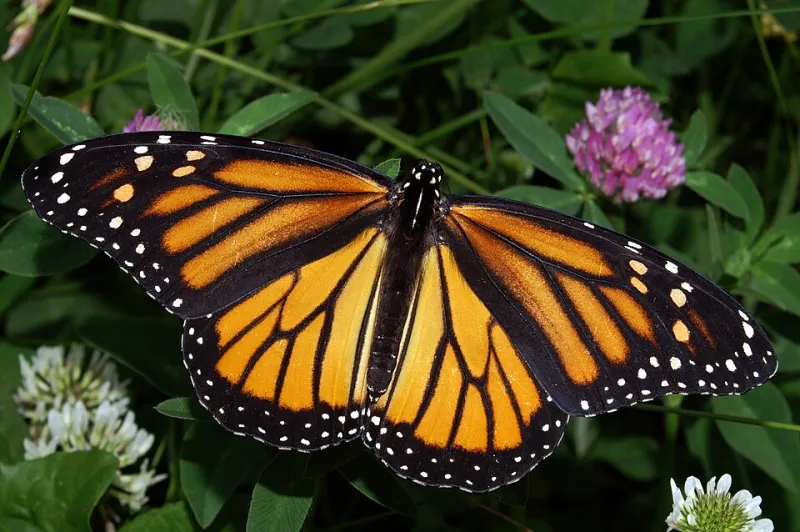
In the butterfly world, there's a moment just after emergence when the wings are still soft and damp. The butterfly is fully formed, but it hasn't yet demonstrated what it can do. It can't fly yet. To an outside observer who didn't witness the process, it might not look that different from what it was before.
But the change is complete. The capacity is there. It just needs a little time and a little sun before it shows up in a way the world can see.
If you're in that moment right now — fully changed inside, waiting for the world to catch up — that's not a sign that your transformation isn't real. It's just the nature of the process.
You don't need everyone to see it to know it's true.
You already know. Hold onto that.