When Someone You Love Can't Follow You Where You're Going

There's a particular kind of grief that doesn't get much airtime. It's not the grief of a dramatic falling out, a betrayal, or even a clean breakup. It's quieter than that — and in some ways, harder. It's the grief of watching a relationship slowly stop fitting, the way a coat you've had for years suddenly pulls wrong across the shoulders. Nothing broke. You just grew.
If you've been doing the work of real personal change — therapy, recovery, spiritual practice, a major life shift — you've probably already felt this. Someone who used to feel like home starts to feel like a place you've outgrown. Conversations that once felt easy now feel like you're translating yourself into a language you no longer speak. And somewhere in the background, a low hum of guilt: Am I abandoning them? Is this my fault? Who do I think I am?
Let's sit with that for a minute. Because those questions deserve honest answers.
Growth Doesn't Ask Permission
Here's the thing nobody tells you when you start doing the work on yourself: transformation isn't just an internal event. It sends ripples outward. The way you communicate changes. What you're willing to tolerate shifts. The things that used to make you feel safe might start to feel constricting. And the people around you — even the ones who love you most — don't automatically update alongside you.
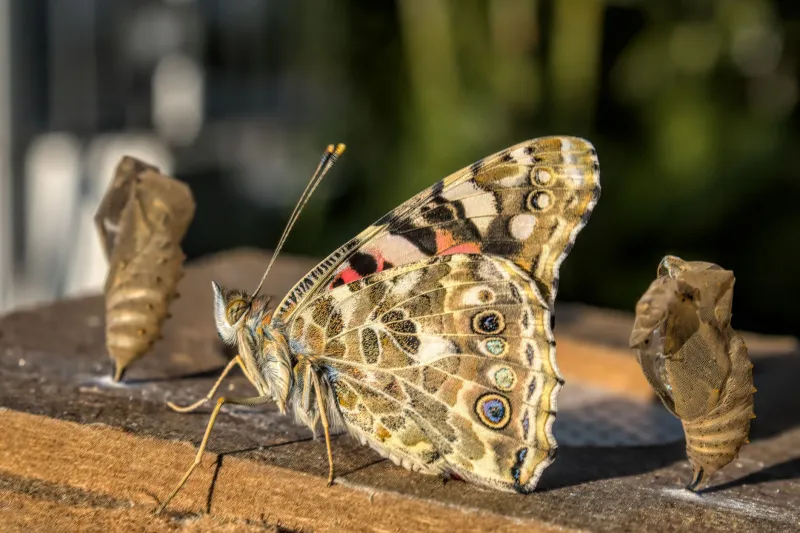
That's not anyone's fault. It's just the nature of change. A butterfly doesn't emerge from the chrysalis and then squeeze back in to keep the caterpillar company. The shape of things has changed. Permanently.
What's painful is that this can happen with people you genuinely love. Friends you've had since college. Family members who were there through your hardest years. Romantic partners who knew you before you knew yourself. The history is real. The love is real. And yet — something has shifted, and no amount of goodwill can fully close the gap.
The Difference Between a Relationship Worth Fighting For and One That's Run Its Course
Not every strained relationship is a sign you need to walk away. Some connections go through rough patches during your growth because the other person is scared, or because the dynamic is adjusting, or because both of you are figuring out how to relate to a newer version of you. Those relationships are often worth the friction. They're worth the awkward conversations, the renegotiating, the grace.
But some relationships are strained for a different reason. Not because the other person is struggling to adjust — but because who you're becoming is genuinely incompatible with what that relationship requires of you. Maybe it requires you to stay small. Maybe it requires you to keep secrets about your real life. Maybe it works only when you're struggling, and now that you're not, there's nothing left to hold it together.
Ask yourself: Does this relationship have room for who I'm actually becoming? Or does it only work when I'm performing an older version of myself?
That's not a trick question. It's a real one. And the answer, honestly, tells you a lot.
Grieving Without Making It a Verdict
One of the most important things you can do when a relationship fades during a period of growth is to resist the urge to rewrite the history. The relationship mattered. The person mattered. The fact that it's ending — or changing in ways that feel like ending — doesn't erase what it was.
Grief is actually the appropriate response here. Not drama, not blame, not a long list of everything that was wrong with them. Just honest, quiet grief for something real that you're losing.
You're allowed to be sad that your best friend from your twenties doesn't really get who you are now. You're allowed to mourn the version of your family dynamic that existed before you started setting boundaries. You're allowed to feel the weight of a friendship that simply ran out of shared ground. None of that sadness means you made the wrong choice by growing.
What it means is that you're human, and you took those connections seriously.
What You Owe Them (And What You Don't)
This is where a lot of people get stuck. There's an unspoken cultural script in America that says loyalty means sameness — that if you really love someone, you'll stay the same person they fell in love with, forever. That script is a lie, but it runs deep.
You don't owe anyone a version of yourself you've genuinely moved past. You don't owe your healing to a relationship that only functions when you're wounded. You don't owe your growth an apology.
What you do owe people — where it's possible and safe — is honesty. Not a full debrief, not a list of grievances, but something real. I've been changing and I'm not sure we're in the same place anymore. That kind of honesty is a gift, even when it's uncomfortable to give.
And then there are situations where even that isn't possible — where the relationship dynamic is too fragile, or too entrenched, or where any honest conversation would do more harm than good. In those cases, a quiet, gradual withdrawal isn't cowardice. Sometimes it's the kindest thing available.
Making Peace With the Person You're Becoming
At the bottom of all of this is a question that's really about you, not them: Can I trust myself enough to keep going, even when it costs me something?
Because that's what this is. Growth costs. Not always in dramatic ways — sometimes it's just the slow, aching cost of no longer fitting inside a life that used to feel like yours. Sometimes it's watching a relationship drift away and knowing, in the honest part of yourself, that you couldn't have stopped it without stopping your own becoming.
That's not a failure. That is, in fact, what it looks like when change is real.
The relationships that survive your transformation — the ones that stretch and flex and find new footing alongside the new you — those are extraordinary. Hold them close. And the ones that don't make it? Honor them for what they were. Grieve them properly. And then keep going.
You're not leaving people behind because you don't care. You're moving forward because you finally do — starting with yourself.